





🎧 Listen: Parenting for Life, Session 2
Richard Harasick · Grace Community Church · 9/27/2009Open Session 2 on gracechurch.org · Download MP3
Richard Harasick · Grace Community Church · 9/27/2009Open Session 2 on gracechurch.org · Download MP3
Lesson 2
The Parent’s Goal
More than outward obedience
Source status: These lesson pages are original study-based adaptations of the Parenting for Life themes. They are not transcripts or official course notes. The Lesson 4 audio has not yet been transcribed. Scripture is quoted from the NASB 1995; read every passage in context.
Lesson opening
What are we actually aiming for as parents? Well-behaved children are a good thing, but they are not the goal. This lesson asks us to define success the way Scripture does: glorifying God, teaching the gospel faithfully, and trusting Him with what only He can do in a child’s heart.
Scripture reading
Read: 1 Corinthians 10:31; Ephesians 6:4; Romans 3:23-24; 2 Timothy 3:14-17
“Whether, then, you eat or drink or whatever you do, do all to the glory of God.”1 Corinthians 10:31 (NASB 1995)
“for all have sinned and fall short of the glory of God, being justified as a gift by His grace through the redemption which is in Christ Jesus;”Romans 3:23–24 (NASB 1995)
Teaching
Define success biblically
The goal of parenting cannot be reduced to producing polite, accomplished or trouble-free children. We are called to glorify God in how we parent, faithfully teaching truth and helping our children recognise their need for Christ.
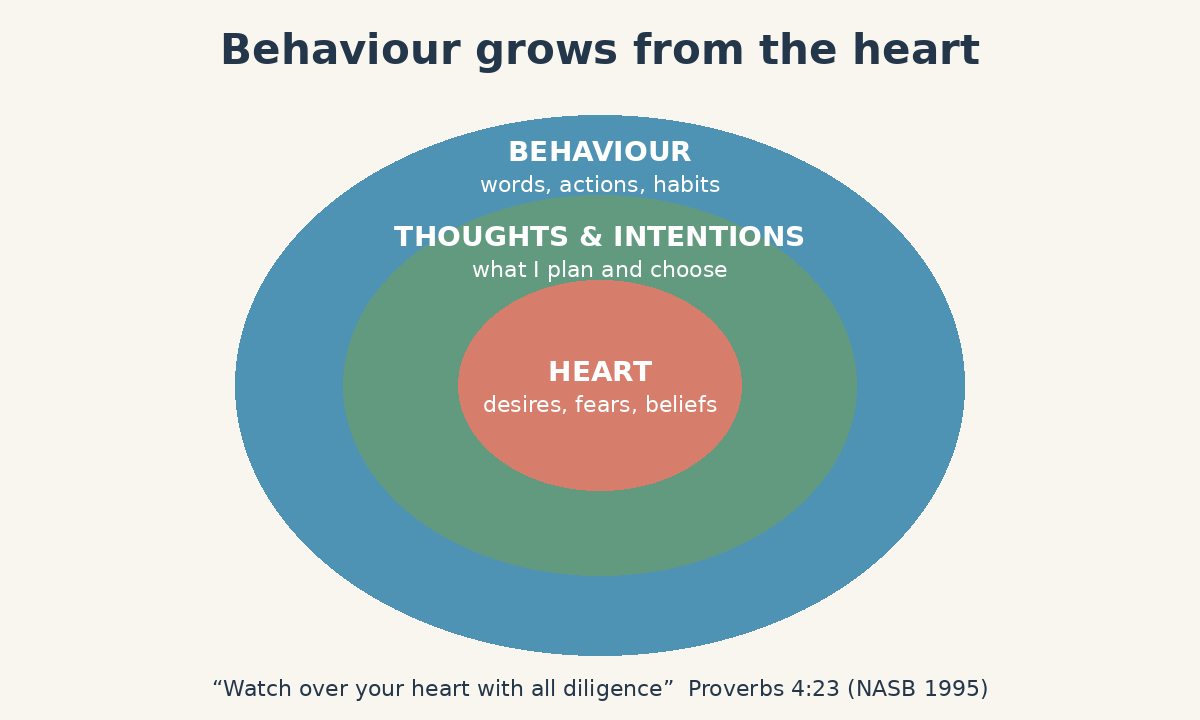
Behaviour matters, but so does the heart
A child may comply to gain approval, avoid consequences or secure a reward. We should teach right conduct without assuming that external compliance equals inward faith. Ask questions that uncover motives, fears and desires rather than only demanding a quick correction.
Teach the gospel rather than moralism
The gospel is not simply “try harder and be good”. Parents and children alike are sinners in need of grace. Explain both God’s commands and the mercy available in Jesus Christ. Instruction should point beyond self-improvement to repentance and faith.
Faithfulness is our task; conversion is God’s work
Parents can pray, teach, model, encourage and correct. They cannot manufacture a new heart or guarantee salvation through a technique. This is a reason for humility, hope and perseverance, not passivity.

My reflection
If I am honest, I am tempted to treat a quiet, compliant child as proof that I am doing well. Good behaviour makes my life easier and makes me look good. But Romans 3 tells me that my children, like me, “have sinned and fall short of the glory of God.” Outward obedience cannot fix that. Only grace in Christ can.
That changes what I am aiming for. My goal is not a polished performance but a heart that knows its need of a Saviour. I believe God saves sinners by His grace alone, so I cannot produce faith in my children by technique or pressure. That humbles me, and it frees me.
My part is to be faithful: to teach the Scriptures that are “able to give you the wisdom that leads to salvation,” to explain both God’s law and His mercy, and to pray. I want to stop settling for “just do what you’re told” and take the time to talk about the heart. And I want to do it all, as Paul says, to the glory of God, not for my own reputation.
Discuss and reflect
- How do I measure parenting success?
- Do I only praise results, or also honesty and wise choices?
- How can I explain the gospel in language my child understands?
This week’s practice
In one correction this week, move from “stop doing that” to a calm conversation about the action, its effect on others, the underlying desire and a better response.
Closing prayer
Father, forgive me for the times I have wanted good behaviour more than I have wanted my children to know You. Help me to do all things to Your glory, to teach Your Word faithfully, and to point my children to the grace that is in Christ Jesus. I cannot change their hearts; I ask You to do what only You can do. Amen.
Download with this lesson
Parenting for Life: Lessons 1–4 study companion (PDF)
Printable infographic pack, 6 sheets (PDF). The Heart and Behaviour sheet supports this lesson.
Scripture quotations taken from the (NASB®) New American Standard Bible®, Copyright © 1960, 1971, 1977, 1995 by The Lockman Foundation. Used by permission. All rights reserved. lockman.org